

 2
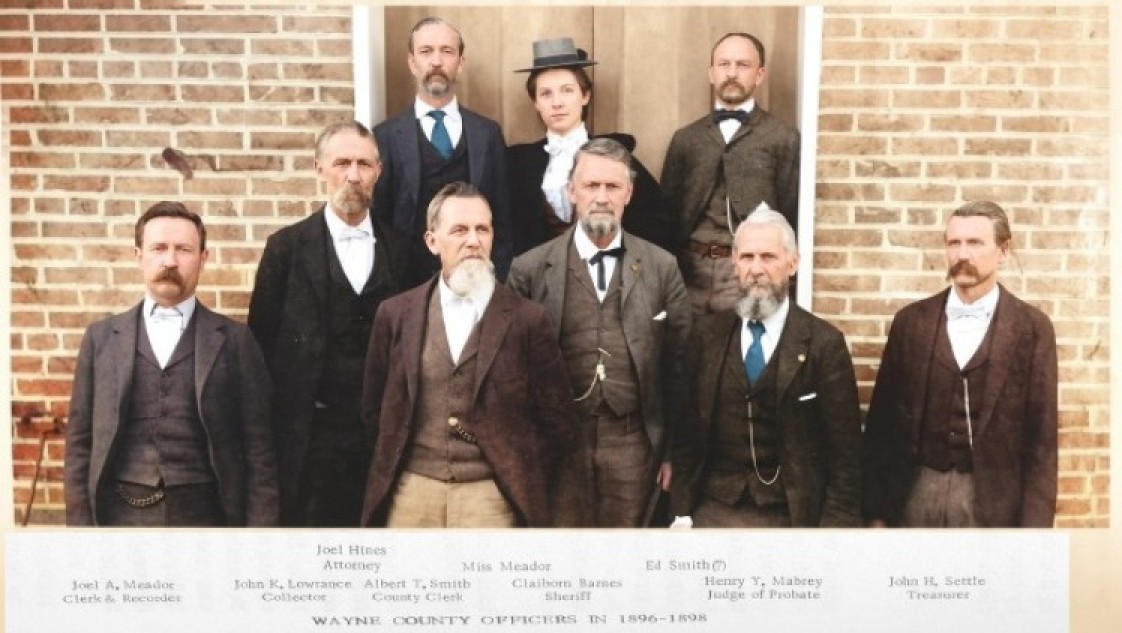
2 (click on the picture to view a larger image)
Wayne
County is available for adoption.
If you have a local connection to Wayne County or an interest in Missouri in general,
Please consider joining the MOGenWeb as a County Coordinator.
Requirements are simple, peruse them here.
https://mogenweb.org/moccguide.htm
MOGenWeb Policies and Procedures
https://www.mogenweb.org/pol-pro.htm
Contact the State Coordinator if you are interested.
In addition:, we would appreciate any contribution that you would like to make to this
site: biographies, obituaries, birth, marriage, death info, grave info, photographs....etc
Wayne County, Missouri
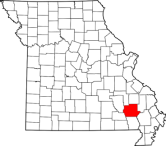
Wayne County was officially organized on December 11, 1818, carved from portions of Cape Girardeau and Lawrence Counties during Missouri’s territorial period. It actually predates Missouri statehood, and for a time in the 1820s it was so large that all or part of 32 present‑day Missouri counties were once within its boundaries.
Early settlement centered along the St. Francis River and nearby ridges of the Ozark foothills. Pioneer families — many arriving under Spanish land grants or migrating from Kentucky, Tennessee, and Virginia — established small farming communities, mills, and river fords. The region was also known to prehistoric peoples and later claimed by the Osage until 1808, with Delaware and Shawnee groups present into the 1830s.
County Seat Selection
When the territorial legislature formed Wayne County, commissioners selected a small settlement called Cedar Cabin on the St. Francis River as the county seat in 1819. The town was soon renamed Greenville, and it remained the administrative center as the county evolved.
Greenville’s original site was abandoned in 1940 when rising waters from the construction of Lake Wappapello forced the town to relocate to higher ground. The modern Greenville continues as the county seat today.
19th‑Century Development
Wayne County’s early courthouse history was turbulent: fires in 1854 and 1892, and stolen records in 1866, left gaps in surviving documentation — an important note for genealogists. Railroads arrived in the 1870s, spurring growth in towns like Piedmont and Patterson. The county’s economy centered on timber, livestock, fruit production, and later recreation tied to its lakes and streams.
Modern Identity
Today Wayne County sits in the eastern Ozark foothills, known for outdoor recreation, historic sites, and long‑running family lines documented in land records, cemetery transcriptions, and surviving courthouse archives. Greenville remains the governmental and historical heart of the county.