

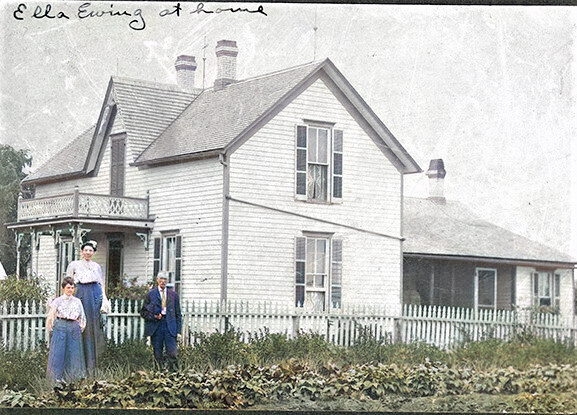
considered the world's tallest female of her era
8' 4"
Scotland County is available for adoption.
If you have a local connection to Scotland County or an interest in Missouri in general,
Please consider joining the MOGenWeb as a County Coordinator.
Requirements are simple, peruse them here.
https://mogenweb.org/moccguide.htm
MOGenWeb Policies and Procedures
https://www.mogenweb.org/pol-pro.htm
Contact the State Coordinator if you are interested.
In addition:, we would appreciate any contribution that you would like to make to this
site: biographies, obituaries, birth, marriage, death info, grave info, photographs....etc
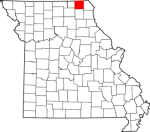
Scotland County, Missouri
Scotland County was organized on January 29, 1841, carved from the northern reaches of Lewis County and named for the ancestral homeland of many early settlers. The region was first home to Native American peoples, including the Sauk and Meskwaki, whose trails and hunting grounds predated the arrival of Euro‑American pioneers.
Permanent settlement began in the late 1830s as families from Kentucky, Tennessee, Ohio, Indiana, and Pennsylvania moved into the open prairie and timbered creek bottoms. Small farming communities grew around natural springs and early trading points, eventually forming the towns of Memphis (chosen as county seat in 1843), Arbela, Granger, Gorin, and Rutledge.
The county’s early decades were shaped by agriculture, local milling, and the establishment of churches, schools, and fraternal lodges that anchored community life. During the Civil War, Scotland County—like much of northeast Missouri—experienced divided loyalties, with local skirmishes and shifting control affecting families and records.
Rail service arrived in the late 19th century, strengthening Memphis as a regional center and supporting the growth of rural post offices, general stores, and small industries. Throughout the 20th century, Scotland County remained a predominantly agricultural county, known for its strong community ties and continuity of family names across generations.
For genealogists, Scotland County offers rich resources: early land entries, probate and court records, church and cemetery histories, local newspapers, and long‑standing family lines that trace back to the county’s earliest settlement era.