

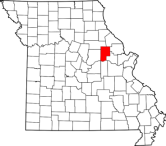
Montgomery County is available for adoption.
If you have a local connection to Montgomery County or an interest in Missouri in general,
Please consider joining the MOGenWeb as a County Coordinator.
Requirements are simple, peruse them here.
https://mogenweb.org/moccguide.htm
MOGenWeb Policies and Procedures
https://www.mogenweb.org/pol-pro.htm
Contact the State Coordinator if you are interested.
In addition:, we would appreciate any contribution that you would like to make to this
site: biographies, obituaries, birth, marriage, death info, grave info, photographs....etc
Montgomery County, Missouri
Montgomery County was organized on December 14, 1818, during Missouri’s territorial period, as settlers from Kentucky, Tennessee, Virginia, and the Carolinas moved west after the War of 1812. The region had long been home to Native peoples, including the Osage, whose hunting grounds and travel routes shaped the early landscape.
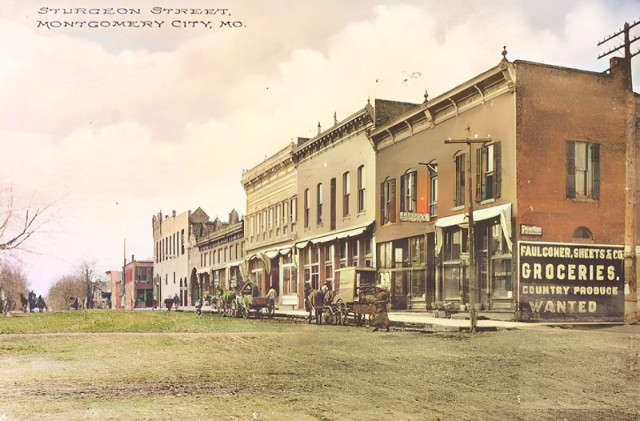
The county’s first seat was established at Pinckney, a river settlement that served the earliest courts and administrative needs. As population shifted inland, the seat moved to Lewiston in 1824, and later to Danville in 1834. Continued growth along the developing railroad corridor led to another relocation, and in 1867 the county seat was permanently established at Montgomery City, where it remains today.
Throughout the 1820s–1850s, Montgomery County grew through small farming communities, mills, and trading points along the Loutre River and the Missouri River bluffs. Mid‑19th‑century German immigration added new churches, cultural traditions, and family lines that remain central to the county’s identity.
Railroads in the late 1800s strengthened towns such as Montgomery City, Wellsville, New Florence, and High Hill, connecting local agriculture and commerce to larger markets. Through the 19th and 20th centuries, farming remained the backbone of the county’s economy, with many families maintaining multi‑generation ties to the land.
Today, Montgomery County’s cemeteries, courthouse records, newspapers, and long‑standing communities offer rich resources for genealogical research. Its history reflects early territorial settlement, multiple county‑seat transitions, and the enduring roots of families who shaped central Missouri.