

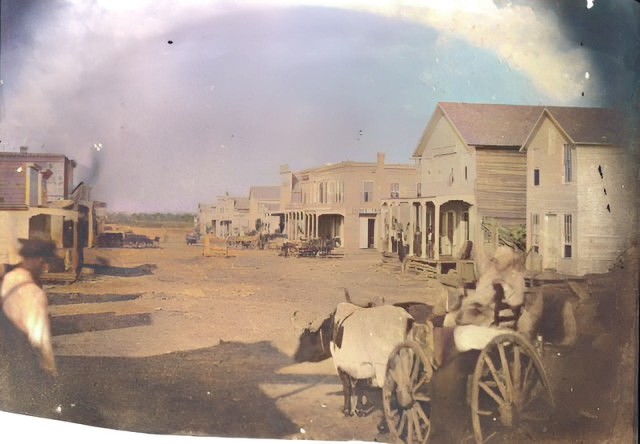
The lady in the wagon is Sarah Lillard, and the man bending over the wagon is Daniel Lillard.
The original photo was the oldest known photo of Lebanon.
(photo colorized by AI)
Laclede County is available for adoption.
If you have a local connection to Laclede County or an interest in Missouri in general,
Please consider joining the MOGenWeb as a County Coordinator.
Requirements are simple, peruse them here.
https://mogenweb.org/moccguide.htm
MOGenWeb Policies and Procedures
https://www.mogenweb.org/pol-pro.htm
Contact the State Coordinator if you are interested.
In addition:, we would appreciate any contribution that you would like to make to this
site: biographies, obituaries, birth, marriage, death info, grave info, photographs....etc
Laclede County, Missouri
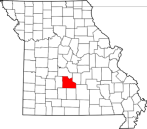
Laclede County was organized on February 24, 1849, carved from portions of Camden, Pulaski, and Wright counties, and named in honor of Pierre Laclède, the French fur trader who founded St. Louis. Situated along the northern edge of the Ozarks, the county developed at the crossroads of early trails, river routes, and later the railroad, making it a natural gathering point for settlers moving into south‑central Missouri.
Before American settlement, the region was home to Indigenous peoples, including the Osage, whose hunting grounds stretched across the Ozark Plateau. The first Euro‑American settlers arrived in the 1820s and 1830s, establishing small farming communities along the creeks and timbered valleys. When the county seat of Lebanon was laid out in 1849, it quickly became the center of trade, court activity, and community life.
The coming of the Southwest Branch of the Pacific Railroad in the 1860s strengthened Lebanon’s role as a regional hub. Although the Civil War brought divided loyalties and occasional skirmishes, the county emerged with its communities intact and continued to grow through agriculture, milling, and commerce. By the early 20th century, Route 66 brought new travelers, businesses, and roadside landmarks that shaped the county’s identity for decades.
For genealogists, Laclede County offers rich research opportunities: early land entries, probate and court records beginning in the 1850s, long‑standing church congregations, rural cemeteries, and newspapers that documented the lives of families who built the county’s farms, towns, and institutions. Today, Laclede County remains a blend of Ozark heritage and transportation history, with deep roots that continue to connect generations.